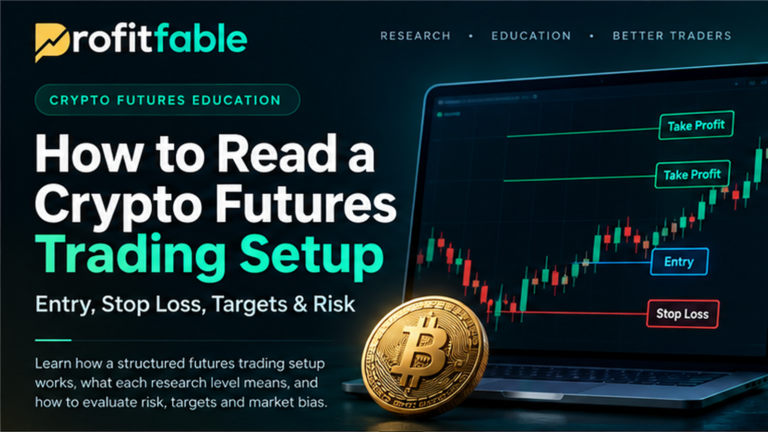
Buying Bitcoin on the spot market, trading a dated Bitcoin futures contract and opening a Bitcoin perpetual futures position can all create exposure to the same cryptocurrency, but they are not the same type of transaction.
The differences affect ownership, leverage, margin, expiry, settlement, funding payments, liquidation risk and how profits and losses are calculated.
Understanding these differences is one of the most important foundations for anyone learning about cryptocurrency derivatives.
What Is Crypto Spot Trading?
Spot trading is the direct purchase or sale of a cryptocurrency at the current market.
If someone buys Bitcoin on a spot exchange and the transaction settles into their exchange balance or wallet, they hold the actual asset or a claim to that asset through the platform.
The position does not normally have an expiry date.
If the Bitcoin price falls, an unleveraged spot holding does not ordinarily face futures-style liquidation merely because the market moved lower.
What Is a Crypto Futures Contract?
A futures contract is a derivative whose value is linked to an underlying asset such as Bitcoin or Ethereum.
A trader does not need to purchase the underlying cryptocurrency in the same way as a spot buyer.
Instead, the trader takes contractual exposure to future price movement according to the rules of the futures product.
Traditional or dated futures normally have an expiration or settlement date.
Depending on the exchange and product, settlement may occur in cash, stablecoin collateral, cryptocurrency or another specified form.
What Is a Crypto Perpetual Futures Contract?
A perpetual futures contract, often called a perpetual swap or simply a perpetual, is a crypto derivative designed to behave similarly to a futures contract but without a fixed expiry date.
A perpetual position can theoretically remain open as long as the trader continues satisfying the exchange's margin requirements and chooses not to close it.
Because perpetual contracts do not have a scheduled expiry that naturally forces convergence with the underlying market, exchanges typically use a funding mechanism to help keep the perpetual price reasonably aligned with its reference market.
This structural difference is why dated futures and perpetual futures should not always be treated as interchangeable terms.
Crypto Asset
Direct exposure through buying or selling the underlying cryptocurrency.
Expiring Derivative
Contractual exposure to cryptocurrency price movement with a defined maturity or settlement date.
Non-Expiring Derivative
Futures-like exposure without a fixed maturity date, normally supported by a funding mechanism.
Product structures vary by exchange and jurisdiction. This is a simplified educational comparison.
Spot vs Futures: Do You Own the Cryptocurrency?
Ownership is one of the clearest differences between the spot and derivatives markets.
Buying BTC in the spot market generally results in ownership or an exchange-held balance representing Bitcoin.
A BTC futures position provides exposure to Bitcoin price movement without requiring ordinary ownership of BTC.
This distinction matters for transfers and withdrawals.
A spot Bitcoin balance may be withdrawable to a compatible external wallet, depending on the platform.
A futures position itself cannot normally be withdrawn to a Bitcoin wallet because it is a derivatives contract rather than Bitcoin.
LONG and SHORT Exposure
Futures markets make it straightforward to express either a bullish or bearish market view.
A LONG futures position generally gains when the contract price rises relative to the entry price and loses when it falls, before costs and other adjustments.
A SHORT futures position generally gains when the contract price falls relative to entry and loses when it rises, before costs and other adjustments.
Spot markets can also support selling and, in some cases, margin-based short selling, but that requires different mechanics.
Futures products are specifically structured to support opposing LONG and SHORT derivatives positions.
The Biggest Difference: Expiry
One of the most important differences between dated futures and perpetual futures is expiration.
A dated futures contract has a defined lifecycle.
Actual futures maturities and settlement procedures depend on the individual contract.
Traders holding the contract as expiry approaches must either close the position, roll exposure into another contract or allow settlement according to the product rules.
A perpetual futures contract removes this fixed expiry date.
Why Perpetual Futures Use Funding Rates
Removing expiry creates a different problem.
With no maturity date forcing the contract toward settlement, a perpetual futures price could theoretically remain persistently away from its underlying reference market.
Cryptocurrency exchanges commonly use funding payments to create an economic incentive that helps maintain alignment.
Exchange funding formulas, intervals and reference-price methods differ between products.
Under the common convention, positive funding generally means LONG holders pay SHORT holders, while negative funding generally means SHORT holders pay LONG holders.
For a detailed explanation, see Crypto Funding Rates Explained .
Leverage: Spot vs Futures
Ordinary unleveraged spot trading is straightforward: if someone has $1,000 available and purchases $1,000 of cryptocurrency, their exposure is approximately the amount purchased.
Futures markets can allow the trader to control substantially more notional exposure than the amount posted as margin.
This is leverage.
If the $5,000 position moves 1%, its value changes by approximately $50 before fees, funding and execution differences.
That $50 represents 5% of the hypothetical $1,000 margin amount.
Leverage therefore amplifies the effect of market movement on the capital supporting the position.
Leverage does not make a market prediction more accurate. It magnifies exposure to the outcome.
Margin and Liquidation Risk
Leveraged futures positions require sufficient margin.
If the market moves far enough against the position and the supporting margin falls below the exchange's required maintenance level, the position may be forcibly reduced or closed.
This is liquidation.
An unleveraged spot holding can fall substantially in market value without facing the same futures liquidation mechanism.
That does not make spot trading risk-free. The asset can still lose most or all of its market value.
The difference is that a normal unleveraged spot holder is not relying on derivatives margin to keep the position open.
For the detailed mechanics, see Crypto Liquidations Explained .
Spot Price and Futures Price Can Be Different
A futures contract does not necessarily trade at exactly the same price as the spot market.
A dated futures contract can trade above or below the current spot price because of market expectations, carrying considerations, supply and demand for derivatives exposure and the time remaining until expiry.
The difference between futures and spot pricing is often referred to as basis.
A futures contract trading above spot has a positive price difference or premium relative to that reference.
A contract trading below spot has a negative difference or discount.
This is especially important for dated futures because the relationship can evolve as expiry approaches.
Perpetual Price Can Also Differ From Spot
Perpetual futures can also trade slightly above or below the spot or index reference.
Funding mechanisms and mark-price systems are designed partly around managing this relationship.
The perpetual market itself has an order book, buyers, sellers and derivatives positioning.
Its most recent traded price therefore does not need to be identical to the last trade on a particular spot exchange.
Fees Are Different Across Spot and Futures
Spot and futures transactions generally have exchange trading fees, but the complete cost structure can differ.
Spot Costs
Spot traders may encounter transaction fees, bid-ask spreads and slippage when purchasing or selling cryptocurrency.
Futures Costs
Futures traders can face trading fees and slippage as well as derivative-specific costs or effects.
Dated futures may reflect basis and expiry-related pricing.
Perpetual Futures Costs
Perpetual positions can additionally pay or receive funding while remaining open through applicable funding intervals.
Therefore, comparing spot and perpetual performance using price movement alone can produce an incomplete picture.
What Does Settlement Mean in Crypto Futures?
Settlement defines how a futures contract is resolved according to its contract specifications.
Some derivatives are cash-settled, meaning differences in contract value are financially settled rather than delivering the underlying cryptocurrency.
Other products can use cryptocurrency-denominated collateral or settlement structures.
Traders should therefore understand the specific contract rather than assuming that buying a BTC futures contract results in receiving Bitcoin at expiry.
Linear vs Coin-Margined Crypto Futures
Crypto derivatives can also differ in how they are margined and settled.
Linear Contracts
Many linear futures contracts use a stablecoin or fiat-linked unit for margin and profit-and-loss calculations.
Coin-Margined Contracts
Some contracts use cryptocurrency itself as collateral or for settlement.
This creates an additional consideration because the value of the collateral can move at the same time as the futures position.
Contract details therefore matter even when two products both carry the label “Bitcoin futures.”
Spot Trading Does Not Mean Zero Risk
The absence of futures-style liquidation does not make spot cryptocurrency inherently safe.
A cryptocurrency can decline significantly in value.
Spot traders can also face liquidity risk, exchange risk, custody risk, security risk and substantial market volatility.
The important distinction is that unleveraged spot exposure does not normally depend on maintaining derivatives margin.
Futures Trading Does Not Require Holding the Asset Long Term
Futures traders can open and close directional exposure without maintaining ownership of the cryptocurrency itself.
This can be useful for market participants who want to express a short-term view, hedge another exposure or obtain LONG or SHORT derivatives exposure.
But flexibility comes with additional complexity.
Margin, leverage, liquidation, mark prices, funding and contract specifications all need to be understood.
Spot vs Perpetual Futures for LONG Exposure
Both a spot purchase and a LONG perpetual futures position can benefit when the cryptocurrency price rises, but the path to the result is different.
The investor purchases the underlying cryptocurrency and generally remains exposed until selling it.
The trader holds a contract linked to cryptocurrency price movement rather than ordinary ownership of the asset.
Leverage, liquidation and funding can materially alter the economics of the perpetual position.
Why Perpetual Futures Are So Common in Crypto
Perpetual futures solve one practical problem for derivatives traders: there is no requirement to continually move from an expiring contract into a later maturity solely to maintain exposure.
They also provide straightforward LONG and SHORT access and can use leverage.
Those characteristics have made perpetual contracts an important part of cryptocurrency derivatives markets.
However, the absence of expiry does not mean the position can be ignored indefinitely.
Funding payments, margin requirements and market movement continue to affect the position while it remains open.
Common Beginner Mistakes
Treating Futures as If They Were Spot Holdings
A futures position is a derivative contract. It should not be confused with owning cryptocurrency directly.
Assuming Perpetual Means Risk-Free Holding Forever
“Perpetual” refers to the absence of a fixed contract expiry, not the absence of liquidation, funding or market risk.
Choosing Leverage Before Understanding Position Size
Leverage determines the relationship between exposure and margin. It is not a measure of trade quality.
Ignoring Funding
A perpetual position held through several funding intervals can accumulate funding payments.
Ignoring the Contract Specification
Margin currency, settlement, expiry, contract size and price reference can differ between products and exchanges.
Assuming Futures and Perpetual Futures Mean Exactly the Same Thing
Perpetual futures are a form of derivatives exposure, but the lack of expiry and presence of funding distinguish them from traditional dated futures.
What Should You Check Before Reading a Futures Market?
How These Markets Fit Into Crypto Futures Research
Understanding the type of market being analysed is essential because spot, dated futures and perpetual futures can contain different information.
Spot markets reflect direct buying and selling of the asset.
Futures markets can additionally reflect derivatives positioning, leverage, expiry expectations and basis.
Perpetual markets add funding, margin and potentially significant leveraged participation.
This is why structured crypto futures market research should distinguish between the underlying spot market and the derivatives environment.
Open interest can help describe outstanding futures exposure, while funding can help describe the economics of perpetual positioning.
You can read more in What Is Open Interest in Crypto Futures? and Crypto Funding Rates Explained .
Final Thoughts
The difference between crypto spot, futures and perpetual futures is much larger than simply choosing another trading screen.
Spot trading generally involves direct exposure to the underlying cryptocurrency.
Dated futures provide derivatives exposure with a defined expiry or settlement date.
Perpetual futures provide futures-like exposure without a fixed expiry and commonly use funding payments to help maintain alignment with the underlying market.
Futures and perpetual futures can also introduce leverage, margin requirements, liquidation risk and additional trading costs that do not apply in the same way to ordinary unleveraged spot holdings.
None of the three market structures is automatically “better.”
They are different tools designed for different forms of market exposure.
The most important first step is understanding what is actually being traded, how the position is financed, whether it expires and what conditions can force the exposure to close .